For today’s businesses, accepting payments is no longer just about moving money, it’s about optimizing approval rates, reducing fraud, managing risk, and staying flexible as your business scales. While many companies start with a simple payment gateway, modern payment stacks increasingly require something more powerful: payment orchestration.
Understanding the difference between a payment gateway and a payment orchestration platform can have a major impact on your revenue, costs, and operational resilience. In this guide, we’ll break down what each one does, how they differ, and how to decide which approach is right for your business
What Is a Payment Gateway?
A payment gateway is the technology that securely transmits payment data from your customer to a payment processor or acquiring bank. It acts as the digital “checkout terminal” for online, mobile, or in-app payments.
In simple terms, a payment gateway:
- Captures payment details from the customer
- Encrypts and tokenizes sensitive card data
- Sends the transaction to a processor for authorization
- Returns an approval or decline response
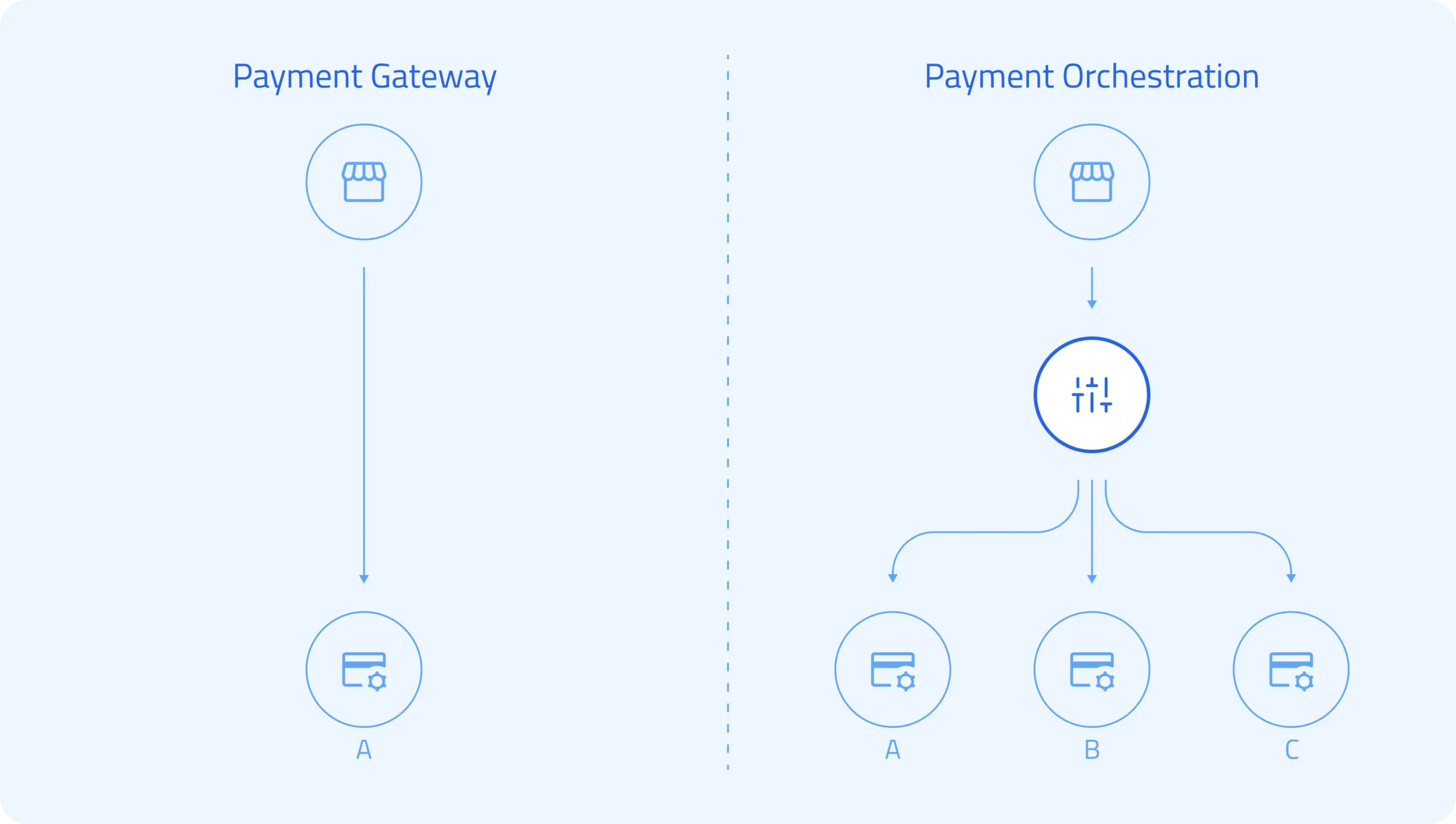
For example, an e-commerce business using a single processor might use a gateway to accept credit cards on their website and mobile app. The gateway handles security, tokenization, and connectivity, but all transactions still flow through one processor and one acquiring path.
A payment gateway is like a single on-ramp to a highway: it gets transactions onto the network, but it doesn’t decide where they go or how to optimize the journey.
What Is Payment Orchestration?
Payment orchestration sits above gateways and processors and acts as an intelligent control layer for your entire payment stack.
Instead of sending every transaction down a single path, a payment orchestration platform allows you to:
- Connect to multiple gateways and processors
- Route transactions dynamically based on rules, performance, or cost
- Use fallback routing when a processor is down or underperforming
- Apply fraud tools, 3D Secure, network tokens, and risk rules before authorization
- Centralize reporting, analytics, and payment logic
For example, a SaaS or marketplace business might route:
- Subscription renewals through Processor A for best approvals
- High-risk traffic through Processor B with 3D Secure
- International cards through Processor C for better regional coverage
All of this happens without changing your checkout or customer experience.
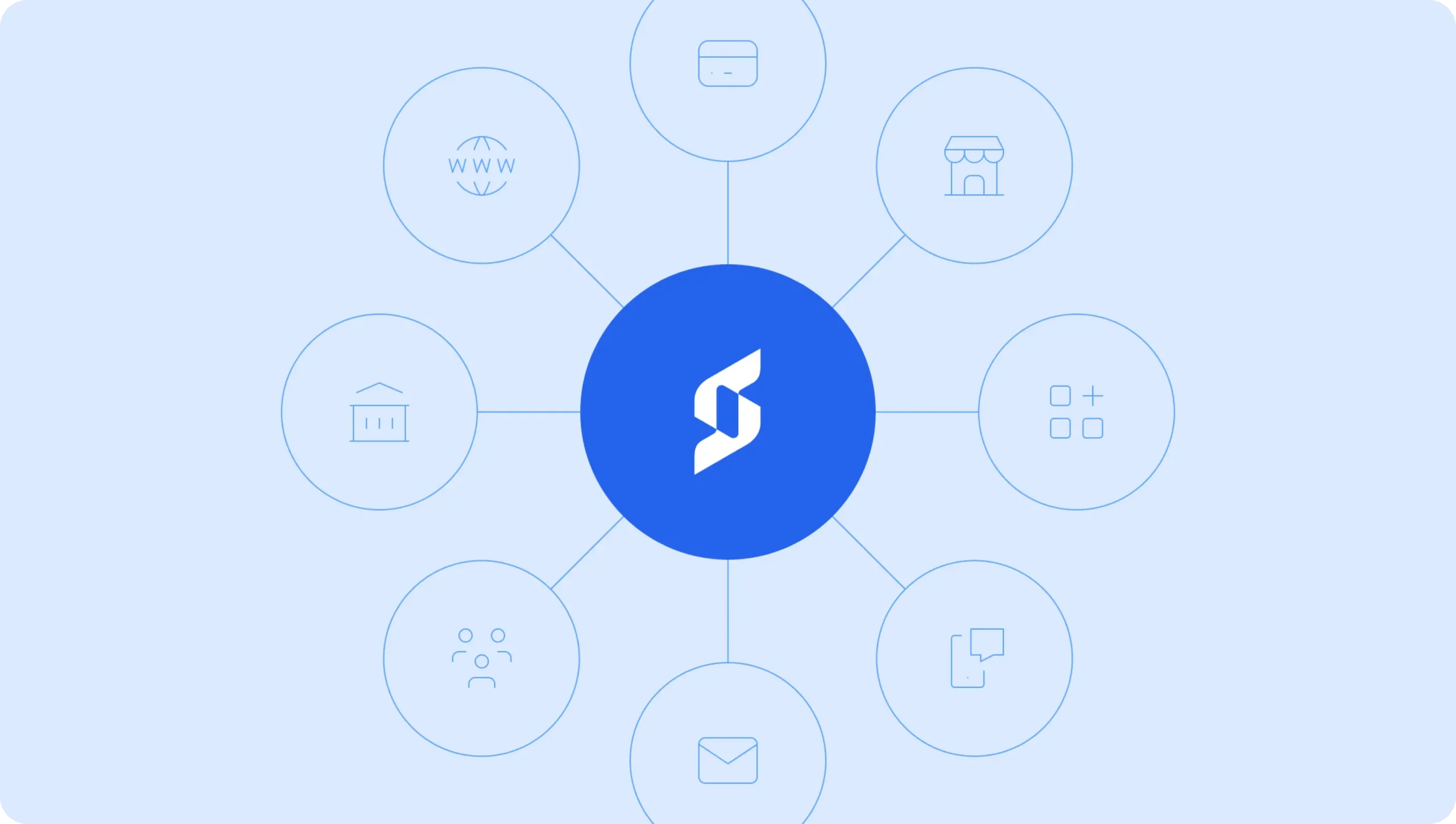
With a solution like SeamlessPay, businesses can orchestrate gateways, processors, tokens, 3D Secure, fraud scoring, and dispute tools through a single unified platform.
Payment orchestration is the air traffic control system for your payments, deciding where each transaction should go, how it should be treated, and how to maximize the chance it lands successfully.
Payment Gateway vs Payment Orchestration: The Core Differences
| Feature | Payment Gateway | Payment Orchestration |
| Primary role | Sends transactions to one processor | Controls and optimizes multiple payment paths |
| Processor choice | Usually single or tightly coupled | Multi-processor, multi-gateway |
| Routing logic | Static | Dynamic, rules-based, performance-basedow |
| Redundancy | Limited or none | Built-in failover and fallback routing |
| Optimization | Minimal | Approval rate, cost, fraud, and risk optimization |
| Lock-in risk | High | Low (processor-agnostic) |
| Data layer | Basic transaction data | Unified data across all providers |
When a Payment Gateway Alone Is Enough
A standalone payment gateway may be sufficient if:
- You only use one processor
- You operate in one geography
- You don’t need advanced routing, redundancy, or optimization
- Downtime or approval rate fluctuations don’t materially impact revenue
For many early-stage businesses, a gateway is the fastest way to get up and running.
But as volume grows, margins tighten, and risk increases, the limitations become obvious.
When You Need Payment Orchestration
- You operate in multiple regions or currencies
- You work with multiple processors or acquirers
- You want to increase approval rates through smart routing
- You need resilience and uptime guarantees
- You want to reduce processor dependency and lock-in
- You need to apply 3D Secure, network tokens, fraud scoring, or BIN rules dynamically
- You want a single unified data and reporting layer
This is especially important for:
- SaaS and subscription businesses
- Marketplaces and platforms
- High-risk merchants
- Global e-commerce brands
- Enterprises optimizing authorization performance and costs
How Network Tokens, 3D Secure, and Fraud Tools Fit Into Orchestration
Modern payment orchestration isn’t just about routing, it’s about intelligent decisioning before a transaction is even sent.
An orchestration layer like SeamlessPay can:
- Use network tokens to improve approval rates and reduce fraud
- Apply 3D Secure selectively based on risk, region, or BIN
- Score transactions using fraud and risk models
- Choose the best processor for each transaction in real time
- Automatically retry or reroute failed transactions
Instead of hardcoding these decisions into your checkout, orchestration makes them configurable, adaptable, and continuously optimizable.

The Strategic Shift: From Payments Acceptance to Payments Optimization
Historically, companies asked:
“How do we accept payments?”
Today, leading businesses ask:
“How do we maximize approvals, minimize fraud, reduce costs, and stay flexible?”
That shift is exactly why payment orchestration is replacing simple gateway-only architectures in modern payment stacks.
How SeamlessPay Bridges Gateways and Orchestration
SeamlessPay combines:
- Gateway connectivity
- Multi-processor orchestration
- Network tokens
- 3D Secure
- Fraud and risk scoring
- BIN intelligence
- Dispute and data tools
Into a single, processor-agnostic payments control layer.
This gives businesses:
- Higher approval rates
- Lower fraud and dispute exposure
- Better uptime and redundancy
- Freedom from processor lock-in
- A future-proof payments architecture
Final Thoughts: Which One Do You Need?
SeamlessPay combines:
- If you just need to accept payments, a gateway is enough.
- If you want to optimize, protect, scale, and control your payments, you need orchestration.
In modern payments, the real competitive advantage doesn’t come from simply processing transactions, it comes from orchestrating them intelligently.
Ready to Move Beyond a Single Gateway?
SeamlessPay gives you multi-processor orchestration, network tokens, intelligent routing, and fraud tools in one platform.