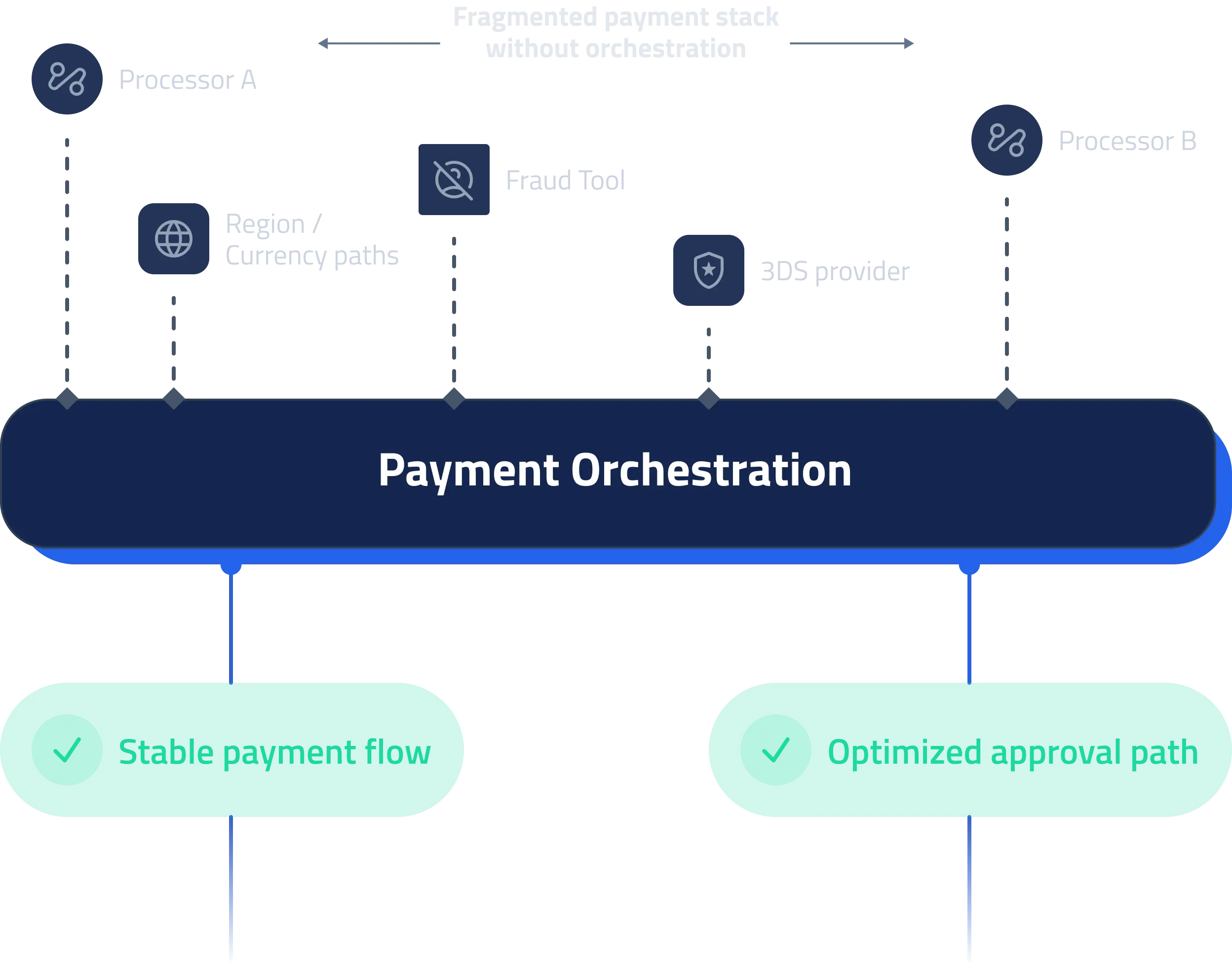
What Is Payment Orchestration?
Payment orchestration is a control layer that sits above your processors, gateways, and payment tools.
Instead of:
Your application → One processor
You get:
Your application → Orchestration layer → Many processors & tools
This allows you to:
- Route transactions dynamically
- Fail over if a processor is down
- Optimize for approvals
- Apply risk rules
- Stay portable and flexible
Why Payment Orchestration Exists
Most businesses eventually hit one or more of these problems:
- Approval rates stagnate or drop
- One processor performs better in some regions than others
- Risk teams block growth
- A processor suddenly terminates or restricts the account
- Migration becomes terrifying and expensive
The lack of orchestration becomes especially dangerous for:
- High-risk businesses
- Subscription businesses
- Marketplaces
- Global companies
Orchestration exists to remove single points of failure from your revenue engine.
What Payment Orchestration Is NOT
Payment orchestration is not:
- Just a gateway
- Just a switch
- Just a load balancer
- Just a routing rule engine
Real orchestration also controls:
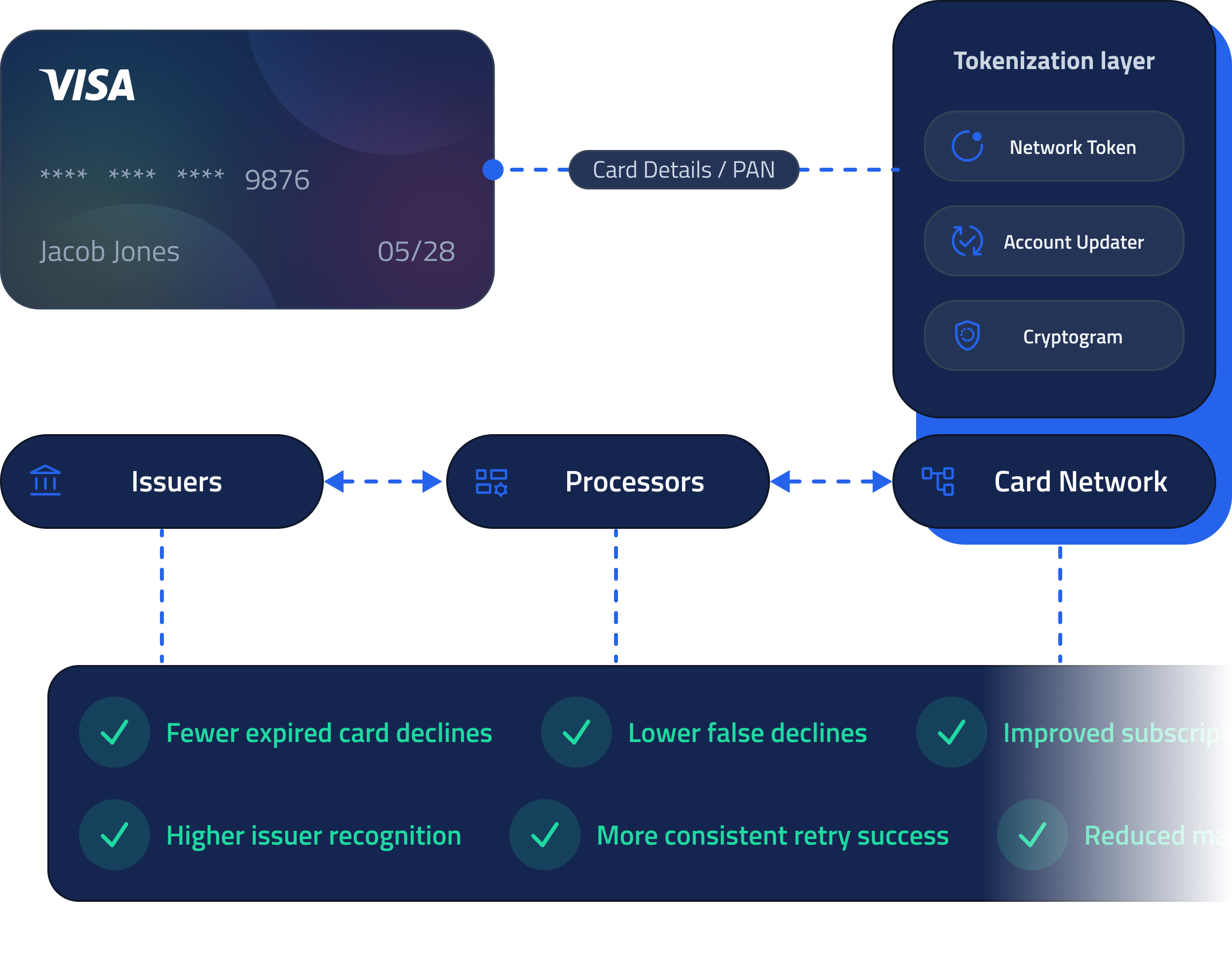
- Tokenization
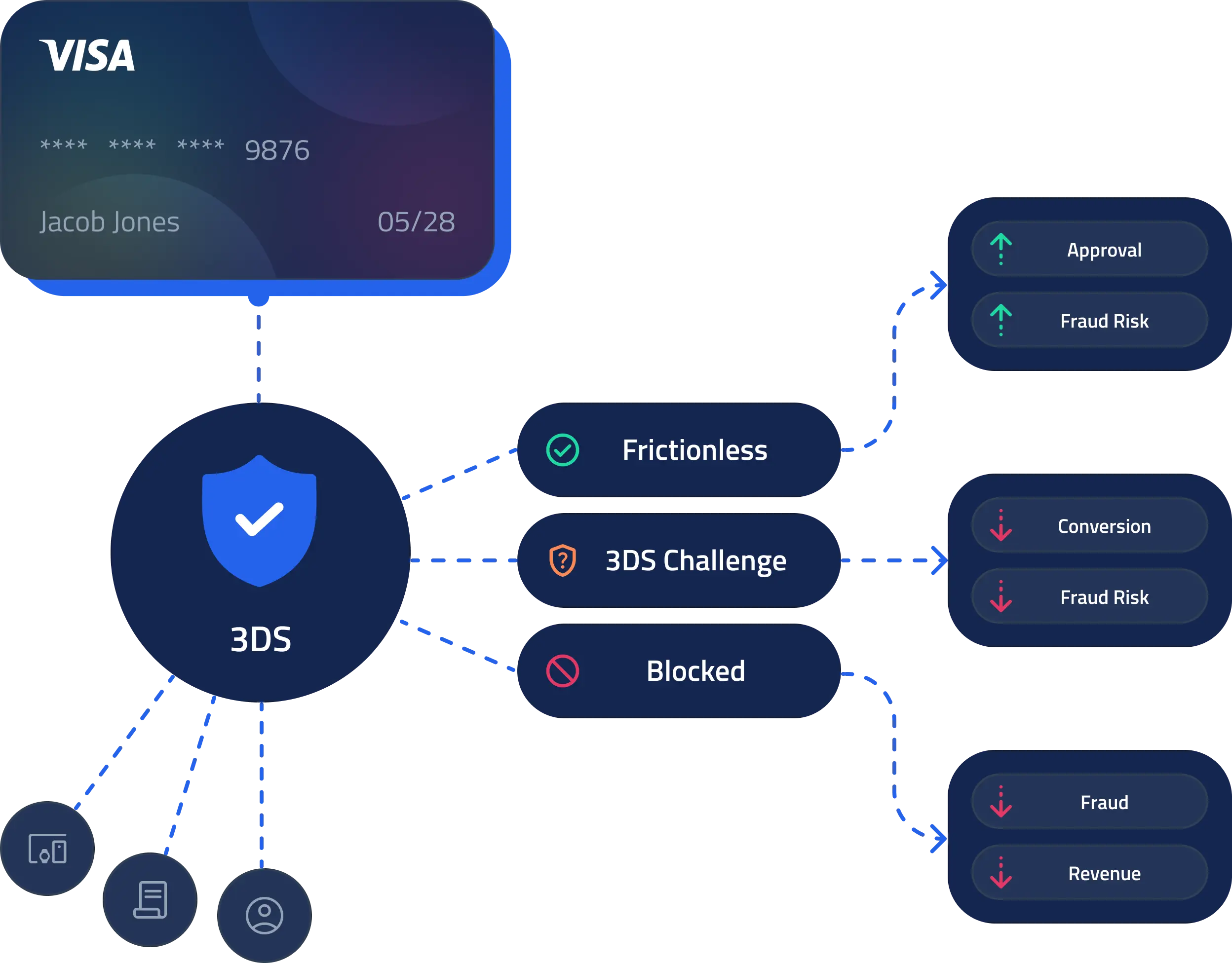
- 3D Secure
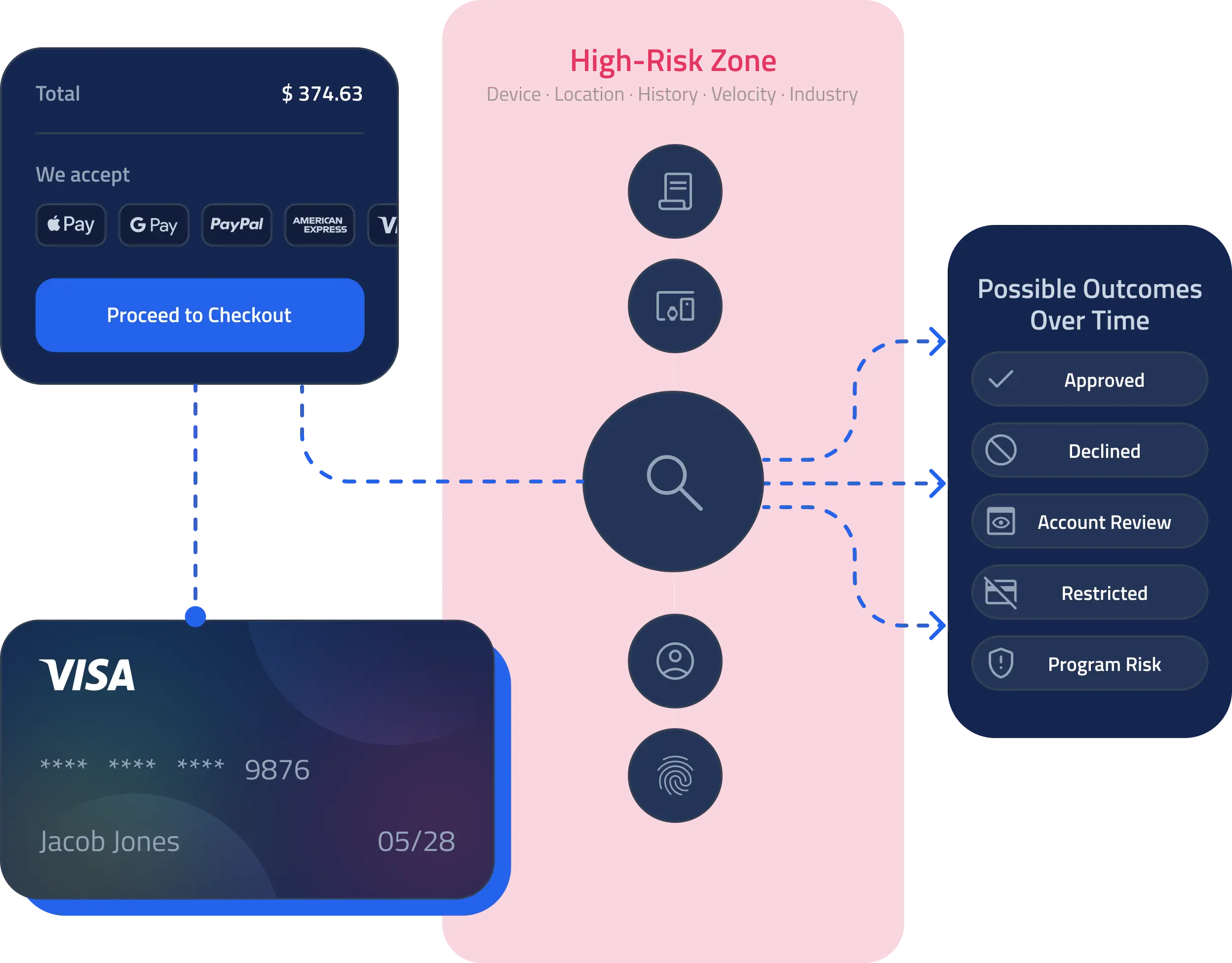
- Fraud decisions
- Chargeback prevention
- Retry logic
- Provider performance
How Payment Orchestration Improves Approval Rates
1. Smart Routing
Route transactions based on:
- BIN / issuer
- Geography
- Card type
- Past performance
(See smart routing guide)
2. Processor Optimization
Different processors approve different traffic better.
Orchestration lets you:
- Send the right transaction to the right provider
- In real time
3. Retry & Decline Recovery
Some declines are soft and recoverable.
Orchestration lets you:
- Retry
- Re-route
- Recover revenue
4. Network Tokens
Using network tokens increases issuer trust and approvals.
How Payment Orchestration Reduces Risk
Orchestration is not just about growth — it’s about survivability.
It helps you:
- Apply adaptive 3DS (see 3D Secure guide)
- Control fraud flows
- Segment risky traffic
- Protect chargeback ratios
- Avoid programs like VAMP and Visa monitoring programs
Orchestration and High-Risk Payments
For high-risk merchants, orchestration is not optional.
It provides:
- Multiple acquiring relationships
- Automatic failover
- Traffic shaping
- Risk isolation
- Business continuity if one provider shuts you down
Orchestration and Tokenization
If your tokens are locked to one PSP:
- You are not really orchestrating
- You are just switching
Real orchestration requires:
- Portable tokens
- Or network tokens
- A universal vault strategy
The Modern Payment Orchestration Stack
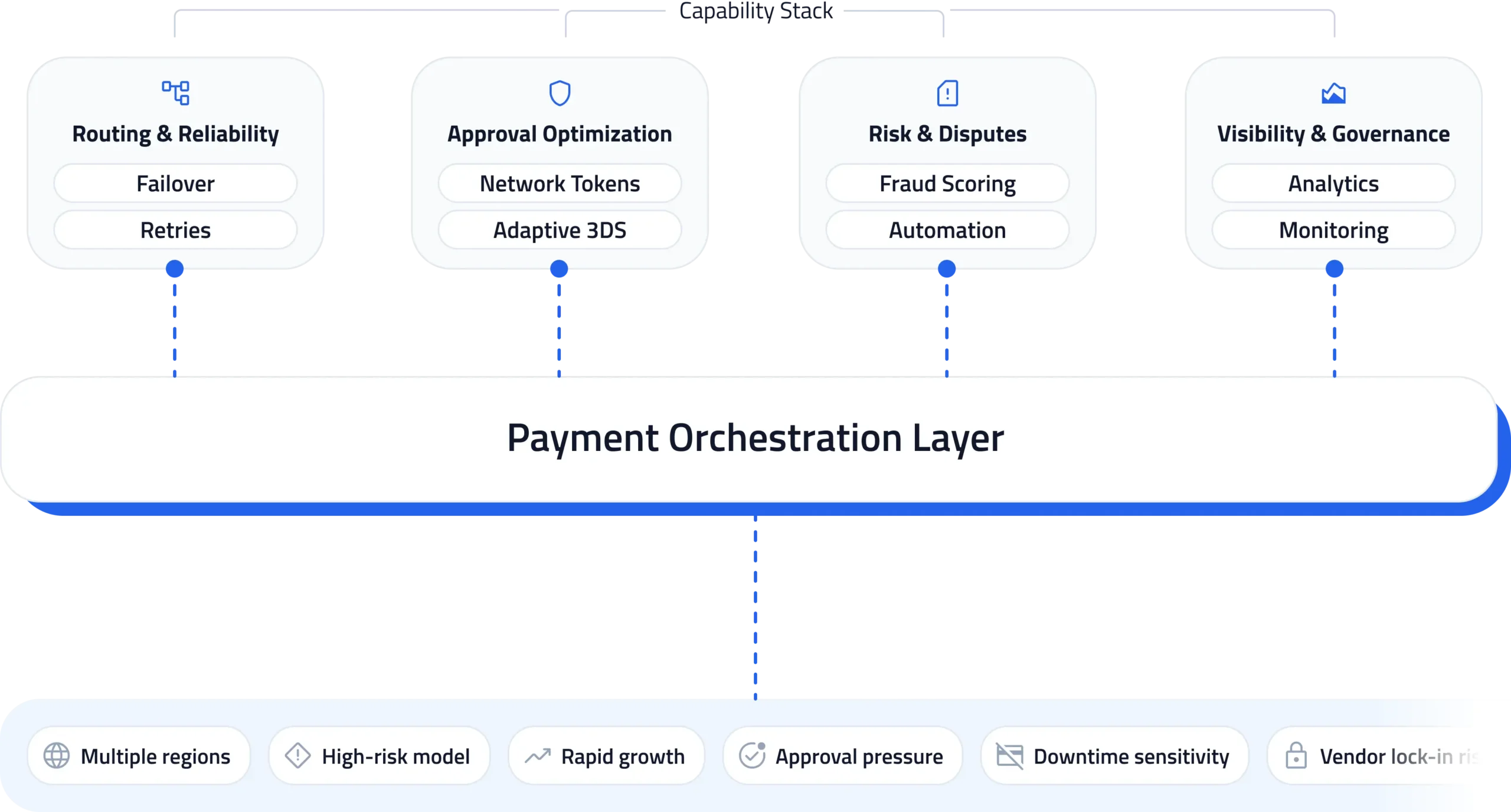
A real orchestration layer should include:
- Multi-processor routing & failover
- Portable tokenization
- Network token support
- Retry & recovery logic
- Adaptive 3DS
- Fraud scoring
- Pre-dispute alerts (see Ethoca vs Verifi)
- Dispute automation
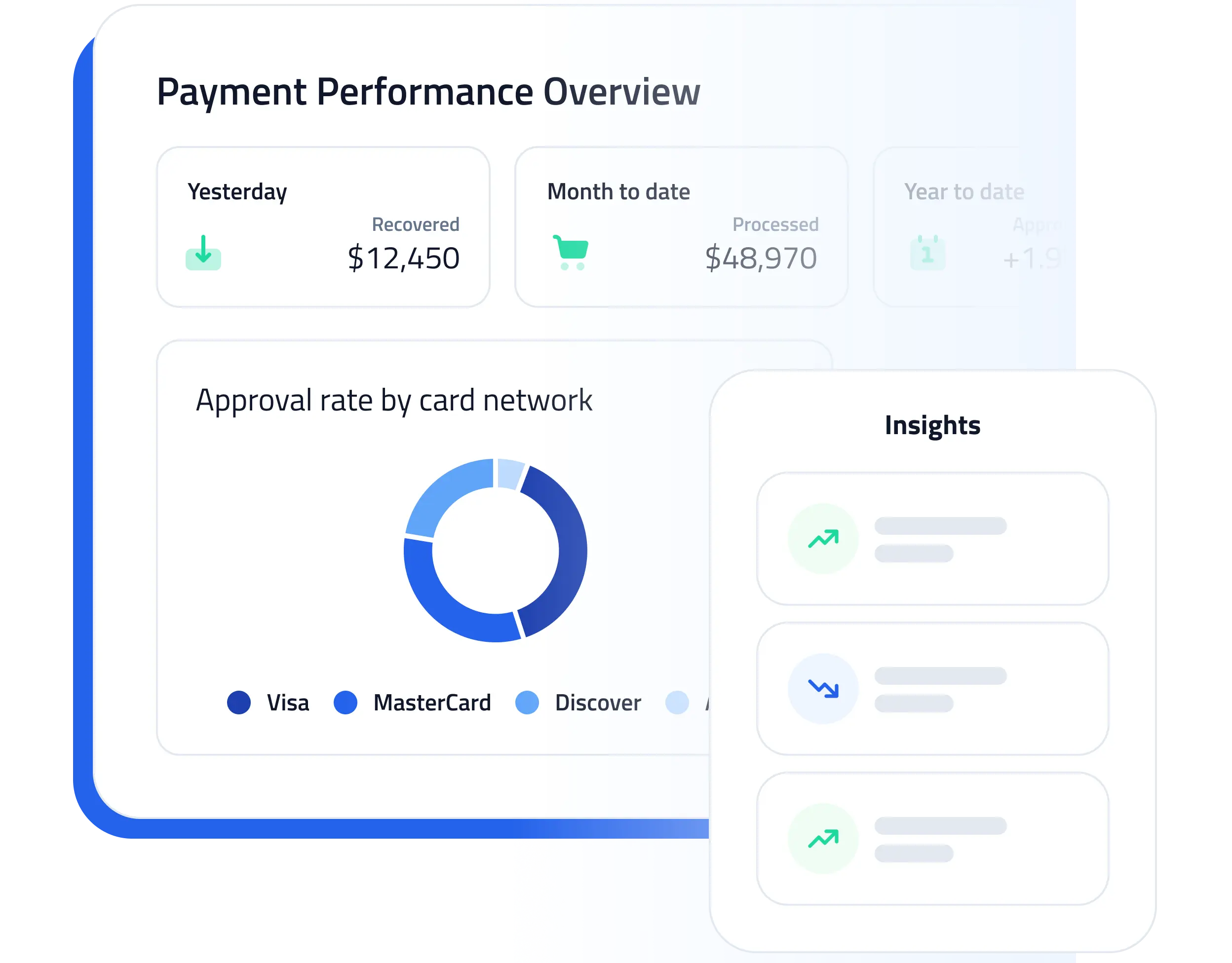
- Performance analytics
When Do You Actually Need Orchestration?
You likely need orchestration if:
- You operate in multiple regions
- You are high-risk
- You are growing fast
- You care about approval rates
- You cannot afford downtime
- You want to avoid vendor lock-in
How SeamlessPay Approaches Payment Orchestration
SeamlessPay treats orchestration as part of a payment optimization and decision engine — not just routing.
With SeamlessPay you get:
- Smart multi-processor routing
- Built-in tokenization
- Native 3D Secure
- Integrated chargeback prevention
- Real-time fraud scoring
- Network token support
- High-risk support (see high-risk guide)
- Performance-driven decisioning
How to Start Using Orchestration Without Breaking Everything
Step 1 — Start With Visibility
Run a payment performance audit.
Step 2 — Add It as a Control Layer
Don’t rip and replace.
Step 3 — Start With Routing + Tokens
That’s usually the fastest ROI.
Step 4 — Expand Into Risk & Optimization
Layer in 3DS, fraud, and disputes.